For people with sensitive or easily irritated skin, selecting acne products that calm inflammation while fighting breakouts can be tricky. This guide highlights five OTC options designed for sensitive skin, focusing on gentle formulas, fragrance-free or-alcohol-free ingredients, and moisturized skin support. Each pick targets blemishes without harsh irritation, helping you maintain healthy skin while reducing redness and flaking. The table below offers a quick glance at the selections most suitable for sensitive skin types.
| Product | Brand | Key Benefit |
|---|---|---|
| La Roche-Posay Effaclar SA Acne Treatment | La Roche-Posay | |
| CeraVe Acne Control Gel | CeraVe | |
| Cetaphil Gentle Clear Mattifying Acne Moisturizer | Cetaphil | |
| Neutrogena Oil-Free Acne Wash | Neutrogena | |
| Differin Adapalene Gel | Differin |
The following sections review each product in depth, focusing on suitability for sensitive or easily irritated skin, how the ingredients work, and practical usage guidelines to minimize irritation while maximizing effectiveness.
La Roche-Posay Effaclar SA Acne Treatment

La Roche-Posay Effaclar SA is designed to address acne-prone skin with a targeted salicylic acid formula. It helps clear existing blemishes while reducing new breakouts with a focus on sensitive-skin tolerance. The product features Procerad and Niacinamide to support skin texture and minimize the appearance of post-acne marks, which can be a concern for those with sensitive complexions. In clinical testing, users observed visible blemish reductions and improvements in pore appearance. For best results, apply sparingly to affected areas after cleansing, avoiding the eyes and mucous membranes. A patch test is advised if you have never used salicylic acid before.
Users should note that results can vary and may require several weeks of consistent use. Before applying, cleanse with a gentle cleanser suitable for sensitive skin, then layer with a non-irritating moisturizer if needed. If irritation occurs, reduce frequency or discontinue use and consult a dermatologist. This product is fragrance-free and formulated to minimize common irritants, making it a solid option for those seeking a more tolerant approach to acne spot treatment.
CeraVe Acne Control Gel
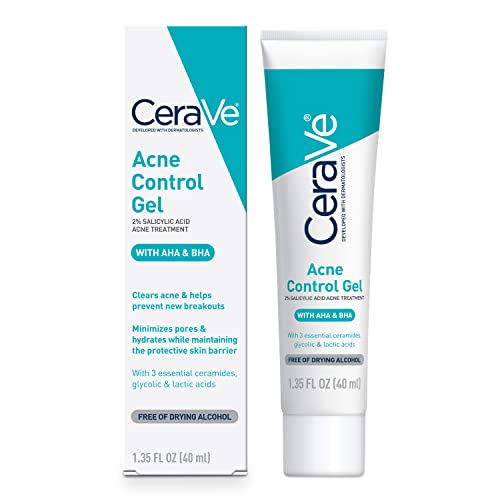
The CeraVe Acne Control Gel combines 2% salicylic acid with glycolic and lactic acids to help clear pores and prevent new breakouts, while Niacinamide supports the skin barrier. The formula is notably alcohol-free and oil-free, which helps prevent additional dryness or shine often associated with acne products. This makes it a strong option for sensitive-skincare routines that require pore clearing without harsh drying effects. Expect mild exfoliation as the active acids work to refine texture, and consider pairing with a non-irritating moisturizer to maintain moisture balance.
To use, apply a thin layer to clean, dry skin on affected areas only. Avoid applying to large areas of healthy skin to minimize potential irritation. If you have sensitive or reactive skin, start with once-daily use and gradually increase to twice daily as tolerated. Because of the acids, it’s wise to apply sunscreen in the daytime to protect newly exfoliated skin. Those with known retinoid sensitivities should monitor for any unusual peeling or irritation when combining with other actives.
Cetaphil Gentle Clear Mattifying Acne Moisturizer

Cetaphil’s Gentle Clear Mattifying Acne Moisturizer provides moisture along with mild acne-fighting action. It contains 0.5% salicylic acid to help clear pores while hydrating skin for up to 48 hours, making it a good option for sensitive skin that tends to feel dry after cleansing or treatment. The formula emphasizes fragrance-free and non-irritating properties, with botanicals and a prebiotic complex to soothe redness and improve texture. It’s designed to be used as a daily moisturizer that also contributes to acne control, helping maintain balance without clogging pores.
For best results, apply to a clean face after cleansing. It can be used morning and night, though sensitive individuals may start with once-daily application to gauge tolerance. As with all products containing salicylic acid, discontinue use if burning, stinging, or severe redness occurs. Complementary sun protection is advised during daytime use to protect the skin and prevent hyperpigmentation from post-inflammatory marks.
Neutrogena Oil-Free Acne Wash
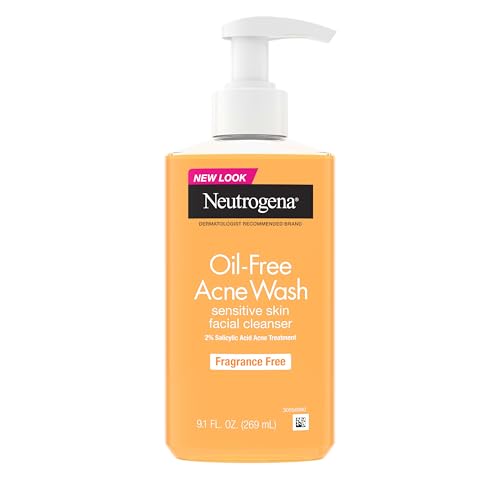
Neutrogena Oil-Free Acne Wash is a fragrance-free cleanser designed to help acne-prone skin without over-drying. With 2% salicylic acid and MicroClear technology, it aims to penetrate pores deeply to target breakouts, blemishes, and blackheads. The oil-free formula rinses away oil and impurities while leaving the skin feeling clean and refreshed. This makes it suitable for sensitive skin that still needs effective acne control. Regular use can help reduce excess shine and improve overall texture when combined with a compatible moisturizer or treatment regimen.
To use, lather a small amount with water and massage onto damp skin, avoiding the eye area. Rinse thoroughly and pat dry. For best results, use twice daily as part of a complete skincare routine. If you experience dryness or irritation, reduce frequency or switch to a gentler cleanser temporarily. Always follow with a moisturizer appropriate for sensitive skin to maintain the skin barrier and comfort throughout treatment.
Differin Adapalene Gel

Differin is an OTC retinoid gel containing 0.1% adapalene, a retinoid that normalizes skin cell turnover to help clear clogged pores and reduce inflammation. It’s formulated for relatively gentle use compared with older retinoids and is commonly chosen for acne-prone skin that is sensitive or reactive. The gel helps treat existing acne while preventing new breakouts over time, contributing to smoother skin texture and fewer future blemishes. Because retinoids can cause irritation at first, start with small amounts and gradually increase use as tolerated, typically at night, and always with sunscreen during the day.
Begin with a patch test and a pea-sized amount applied to a small area for the first week or two. If irritation occurs, reduce frequency or consult a dermatologist, especially if you have a history of dermatitis or very sensitive skin. Do not combine with strong benzoyl peroxide products in the same routine without professional guidance, and consider layering with a soothing moisturizer and sun protection to preserve skin health during treatment.
Buying Guide: Key Purchase Considerations For Sensitive Skin
- Active ingredients and skin tolerance:
Common acne actives include salicylic acid, glycolic/lactic acids, azelaic acid, benzoyl peroxide (in lower percentages or for short durations), and retinoids like adapalene. For sensitive skin, prioritize formulas that emphasize gentle concentrations, non-irritating bases, and barrier-supportive ingredients like ceramides or niacinamide. - Fragrance-free and alcohol-free options:
Fragrance and alcohol can trigger irritation or redness in sensitive skin. When possible, choose fragrance-free products and those labeled as alcohol-free to minimize dryness while treating acne. - Hydration and barrier support:
Look for moisturizers with humectants or ceramides to help maintain hydration and support the skin barrier, especially when using drying actives. A hydrated barrier reduces irritation and improves overall comfort during treatment. - Non-comedogenic formulations:
Non-comedogenic products are less likely to clog pores, reducing the risk of additional breakouts. This is especially important for sensitive skin that can react to occlusive or heavy formulas. - Patch testing and gradual introduction:
Introduce one new product at a time and test on a small area for 7–14 days. If no irritation occurs, gradually incorporate into your full routine to monitor tolerance over time. - Layering strategy:
In many routines, cleanse, treat, and moisturize in layers. If you use a retinoid or acid, pair with a soothing moisturizer and sunscreen in the daytime to protect and support the skin’s recovery process. - Sun sensitivity:
Retinoids and some acids can increase sun sensitivity. Apply broad-spectrum sunscreen daily and reapply as directed to prevent sun damage and post-inflammatory hyperpigmentation. - Teen vs adult skin considerations:
Younger skin can be more reactive. Start with milder concentrations and shorter exposure, focusing on barrier support and hydration while monitoring for irritation or dryness.
These considerations help navigate the balance between effective acne treatment and maintaining comfort for sensitive skin. Selecting products with gentle actives, minimal irritants, and barrier-supportive ingredients can yield clearer skin while preserving skin health over the long term.