Finding the right eczema scar cream involves balancing hydration, scar reduction, and skin sensitivity. The five selected products below target new and older scars while being mindful of sensitive skin. Each option leverages silicone-based formulas and complementary ingredients to soothe itch, improve texture, and even out discoloration. The table summarizes core details at a glance.
| Product | Brand | Focus | Notable Benefit |
|---|---|---|---|
| EASEWAVE Silicone Scar Cream | EASEWAVE | 6.7% active ingredients; surgical, C-section, burns, acne, stretch marks | Visible improvements in as little as two weeks; 72‑Hour Shield for comfort |
| Tuoharliy Scar Cream | Tuoharliy | Silicone-based with retinol and allantoin | Fast-absorbing, non-greasy formula; versatile for many scar types |
| Pumkot Silicone Scar Gel | Pumkot | Silicone gel with Centella Asiatica and EGF | All-day wear; helps soften and flatten scar tissue |
| ABERA Scar Cream Upgrade | ABERA | Skin regeneration; wounds, eczema-related irritation | Soothes eczema irritation while aiding repair |
| CLNABFR Advanced Scar Cream | CLNABFR | Dimethicone-based with ascorbic acid and other actives | Broad scar coverage; targets redness, texture, and color |
EASEWAVE 6.7% Scar Cream
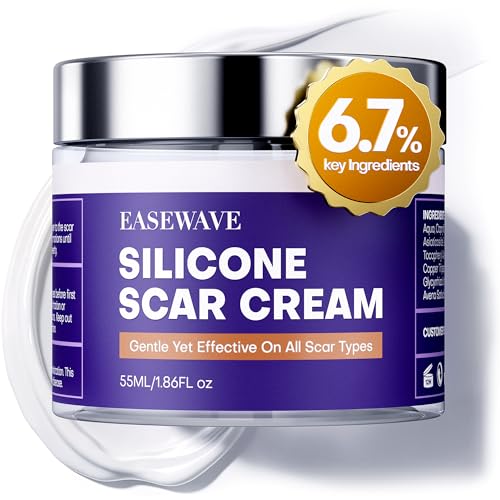
EASEWAVE combines a 6.7% active complex with a silicone backbone to support scar reduction across several scar types, including surgical and burn scars. The formula uses 3% medical-grade silicone paired with 3.7% advanced compounds designed to boost hydration and barrier function. It emphasizes faster improvements for new scars, with claims of visible results in about two weeks. Users may experience reduced itch and improved comfort as the skin repairs.
The product also highlights a 72-Hour Shield that helps manage itch, dryness, and tightness by sealing in moisture. Squalane, ceramide NP, and panthenol contribute to soothing depth, which can be important for eczema-prone or irritated skin. The brand cites high user satisfaction for sleep comfort and reduced nightly scratching, though individual results may vary depending on scar age and skin sensitivity.
In practice, this cream is suitable for patients seeking a targeted scar regimen that also considers everyday dermatitis-like irritation. It is important to perform a patch test when switching to any silicone-based product and to follow a consistent twice-daily application as part of a broader skin-care routine.
Tuoharliy Scar Cream
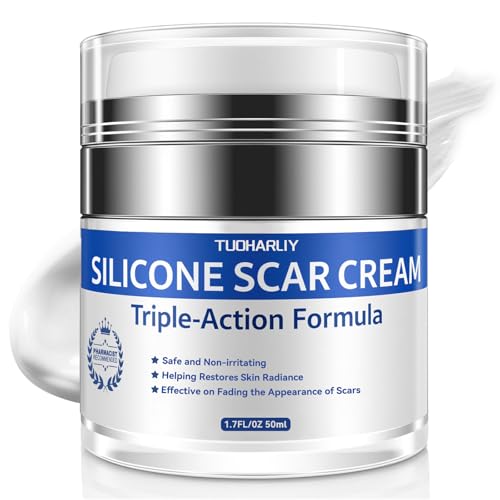
Tuoharliy’s Scar Cream combines medical-grade silicone with retinol and allantoin. This triple-action approach hydrates deeply, supports skin renewal, and helps smooth scar texture over time. The formula is designed for a broad range of scars, including those from C-sections, surgeries, burns, and even older marks, with the goal of softening, flattening, and fading scar tissue through consistent use.
Users report fast-absorbing, lightweight performance that leaves little to no greasy residue, making it suitable for daytime use under makeup or sunscreen. The product is positioned for sensitive skin but, as with any silicone-based product, a patch test is recommended. It is not intended for unhealed wounds and should be applied as part of a regular scar-management routine.
For eczema-prone or dry skin, Tuoharliy’s balanced hydration can help ease tightness without clogging pores. Its multi-scar applicability makes it a flexible option for households managing several scar types, from acne scars to surgical lines, with ongoing use supporting gradual improvement.
Pumkot Silicone Scar Gel

Pumkot’s Silicone Scar Gel emphasizes a triple-action approach by combining silicone, Centella Asiatica, and Epidermal Growth Factor (EGF). This blend aims to seal in moisture, support collagen production, and promote cell renewal to soften raised scar tissue. The formula is described as fast-absorbing and non-greasy, delivering hydration without residue, which is particularly helpful for individuals with sensitive skin or eczema-prone areas that react to heavy creams.
The product is designed for long-term scar care across a range of scar types, including surgical scars, C-sections, burns, and acne scars. Twice-daily application is suggested, with emphasis on consistent use to achieve smoother texture and less noticeable pigmentation. Users may appreciate the breathable barrier that accommodates daily activities and reduces potential irritation.
As with other silicone-based options, a patch test is wise, and patients should avoid using on open wounds. The long-term emphasis is on gradual improvement, with ongoing care supporting softer, flatter skin and a more even tone as scars mature.
ABERA Scar Cream Upgrade

ABERA’s Scar Cream Upgrade emphasizes skin regeneration and wound healing, with a focus on soothing irritated skin, including eczema-prone areas. The formulation aims to support new skin formation and repair while calming irritation, making it a potential option for sensitive demographics who need dual benefits of scar care and eczema relief.
The product’s messaging centers on regeneration and soothing relief rather than a single silicone-centric claim. While results vary, users may experience improved skin comfort and accelerated healing when applying the cream as part of a regular scar-management routine. Patch testing is advised to ensure compatibility with sensitive skin types and to avoid irritation from active ingredients.
For consumers seeking a gentle option that prioritizes both repair and itch relief, ABERA’s upgrade variant offers a balanced approach. It can be used across a range of scar types, with particular utility for those who want eczema-related comfort alongside scar improvement.
CLNABFR Advanced Scar Cream

CLNABFR’s Advanced Scar Cream is formulated with a medical-grade blend that includes 3% dimethicone and 1% ascorbic acid, along with panthenol, allantoin, hyaluronic acid, and retinol. This combination targets scar redness, texture, and pigmentation, aiming to deliver visible improvement after several weeks of consistent use. It is positioned for both new and older scars across multiple types, including postoperative and stretch marks.
The formulation emphasizes nourishing moisture and barrier support, using silicone to create a breathable, protective layer that supports collagen production and cell renewal. It is suitable for a wide range of skin types, but as with any product containing retinol and vitamin C, sensitive individuals should perform patch tests and adjust usage to minimize irritation and dryness.
For those seeking a more clinical approach to scar care, CLNABFR offers a robust set of actives designed to address multiple dimensions of scar appearance, including color and texture, while maintaining skin comfort during ongoing treatment.
Buying Guide
Key purchase considerations
- Target scars and timing: New scars respond differently from old ones. Look for formulas that emphasize early improvements for fresh wounds and longer-term remodeling for mature scars.
- Silicone content and actives: Most effective options combine medical-grade silicone with complementary actives like retinol, ascorbic acid, centella, and EGF. Consider your tolerance for fragrance and potential irritants.
- Skin sensitivity and eczema relevance: For eczema-prone skin, prioritize fragrance-free or hypoallergenic formulas, and prefer products that emphasize soothing and barrier-supporting ingredients such as ceramides and panthenol.
- Absorption and feel: Fast-absorbing, non-greasy gels are often preferred for daytime use or under makeup. Heavier creams may be better for very dry or thick scar tissue but can feel sticky for some users.
- Frequency and regimen: Most silicone-based products are used twice daily. Consistency is crucial, as results typically accrue over weeks to months depending on scar age and skin type.
- Patch testing and safety: Always perform a patch test on a small skin area before full application. Be aware of retinol or vitamin C sensitivities and avoid applying to open wounds.
- Size and maintenance: Scar care is a long-term commitment. Choose a size that fits your routine and travel needs, and consider whether you prefer a gel or cream texture.
How to compare the five options
- Best for quick initial improvement: EASEWAVE emphasizes visible results in as little as two weeks for new scars, with added itch relief for nighttime comfort.
- Best for versatility across scar types: Tuoharliy offers a balanced triple-action approach with silicone, retinol, and allantoin suitable for surgical, acne, and old scars.
- Best all-day hydration and renewal support: Pumkot combines silicone with Centella Asiatica and EGF to promote moisture retention and tissue remodeling.
- Most eczema-focused relief: ABERA highlights skin regeneration and soothing effects for eczema-related irritation alongside scar care.
- Best for multi-dimensional scar improvement: CLNABFR delivers redness reduction, texture smoothing, and color balancing with a strong vitamin C and retinol blend.
Practical tips for use
- Patch test any new product for 24-48 hours on a discreet area before full-face or large-area use.
- Follow the product’s recommended frequency, typically twice daily, and apply to clean, dry skin.
- Avoid applying on broken skin or active wounds; consult a clinician for guidance on severe or non-healing scars.
- Combine with sun protection to prevent post-inflammatory hyperpigmentation, especially when vitamin C and retinol are used.
- Keep expectations realistic: most products reduce appearance and improve texture gradually over weeks to months.
All five options provide silicone-backed strategies with complementary actives. When selecting, align the choice with your scar history, eczema considerations, and comfort with texture and frequency. A tested approach and patience often yield the best long-term improvements in skin smoothness and tone.