Your longest makeup brush is often the item that decides whether a travel case is practical, but length is only part of the fit. Include the broadest head, the protective accessory you actually use, the case opening, and the other closed items that will share the space before you call a bag ready for a trip.
Begin with the routine you intend to take rather than your whole collection. A clear packing plan gives each selected tool a job and a suitable resting place, while leaving care needs and the limits of the actual case visible instead of assuming that a neat arrangement guarantees protection.
Choose the travel jobs first
Write the makeup steps you expect to use during the trip and place their assigned tools beside them. Keep optional looks separate at first so a brush that you might use once does not determine the size of the everyday case before you have decided whether that extra job matters.
Keep the actual product directions in mind when you choose tools, and do not assume that every formula can be transferred into a smaller container. This is a packing exercise for tools and closed products, not a claim about formula stability, container compatibility, or what an airline will permit you to carry.
For a fictional weekend kit, you might take a base tool, one cheek-color brush, and a finishing brush, with an optional detail tool in a separate group. That example is a way to identify space needs, not a universal number of brushes or a rule about how a reader should apply makeup.
Measure the complete ready-to-pack tool
Use the full length from the end of the handle to the outer head, then include the sleeve or fitted case if the tool uses one for travel. A measurement of the bare brush can underestimate what you need when its appropriate protective accessory adds width, height, or a closing flap.
Measure the widest protected head as well, especially if you plan to use individual slots. A slot that accepts the handle may put pressure on the head once the case is folded, and a soft pocket can have less usable opening space than the width of its fabric panel suggests.
Write the longest tool and the broadest protected tool as separate entries if they are different items. That gives you a better comparison than one “large brush” measurement, and it keeps the fit question specific when you ask a seller about a case you cannot inspect before buying.
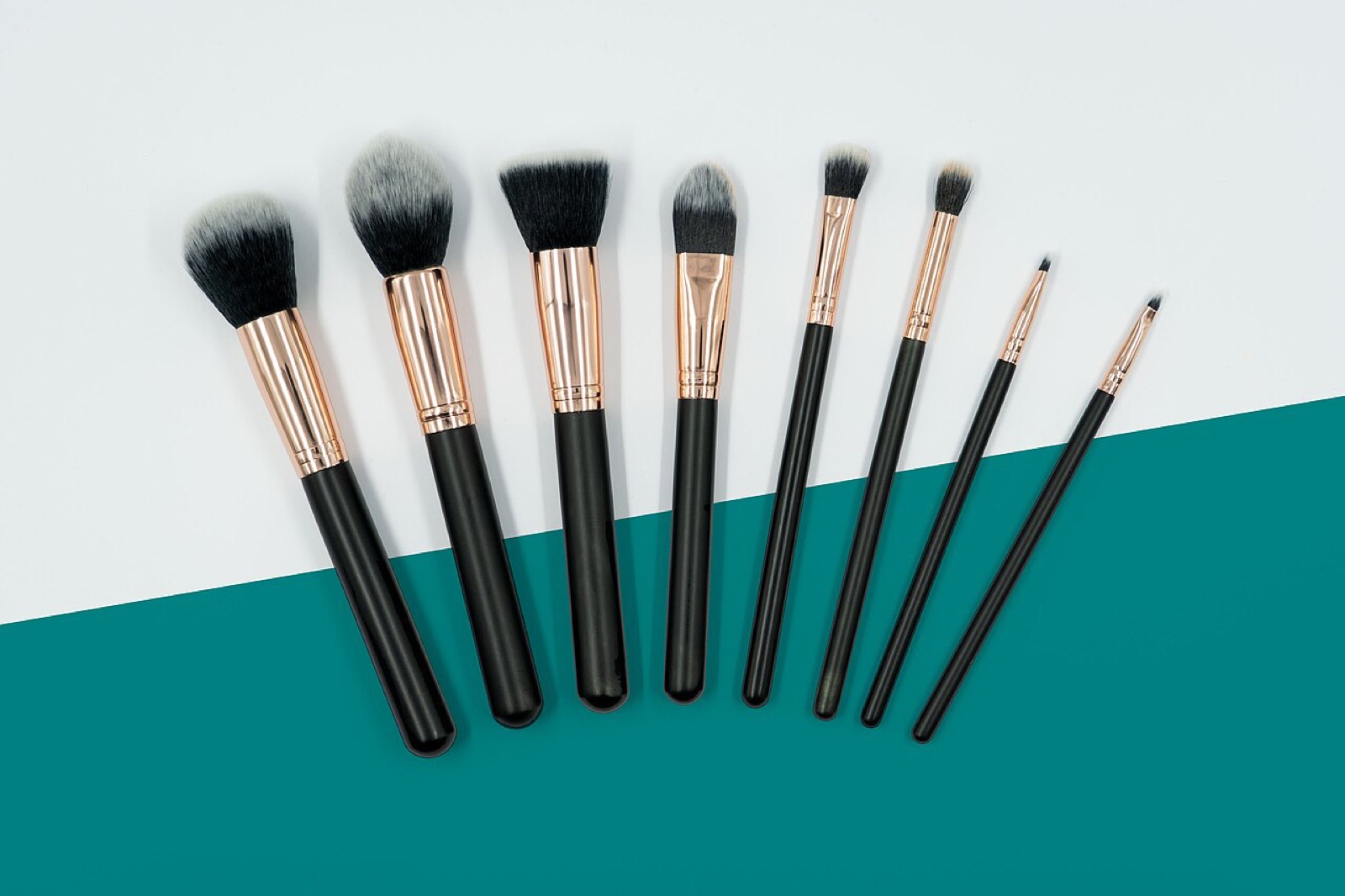
Ask for usable case space
Check internal dimensions, the opening shape, and any dividers or pockets that occupy the case rather than relying only on outside measurements. A long exterior zipper does not automatically mean the whole length opens wide enough to insert a protected brush without dragging it across the edge.
As a product-specific example, Sea to Summit lists separate Small and Large measurements for its Ultra-Sil Hanging Toiletry Bag. That distinction helps you identify a variant, but it still does not establish the internal brush clearance or usable pocket dimensions you would need for a fit-critical packing decision.
If you cannot confirm an essential internal measurement, keep that question unresolved instead of guessing from a staged photograph. A pictured tool may be shorter than yours, may sit outside the closed bag, or may not have the same protective accessory you intend to use during travel.
Keep the closing path clear
Arrange the selected clean, dry tools in the case as its instructions allow, then look at where the zipper, flap, or lid will move. Leave the heads clear of that path so closing the bag does not depend on pushing the contents down or pulling fabric across a tool.
Try removing and returning the longest brush while the rest of the kit remains in place. A bag that closes around everything may still be awkward if you must empty it to retrieve the tool you use first, especially in a room with very little temporary counter space.
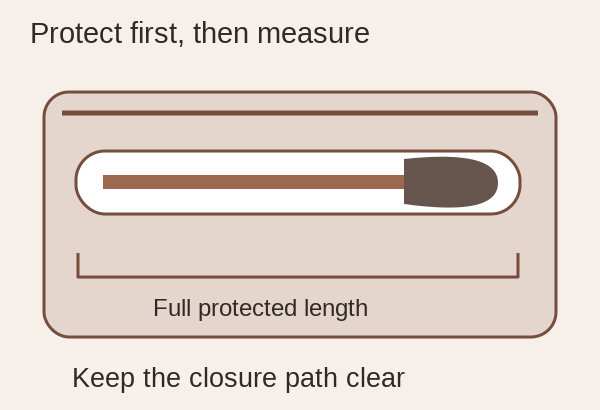
Keep dual-ended brushes in their own assessment because both ends need an appropriate arrangement. Do not treat an empty upright pocket as automatically suitable just because the full length fits; check the actual brush and case instructions rather than using one head as an ordinary handle end.
Try the larger carrying arrangement
Put the closed brush case into the larger bag you expect to use and notice how you retrieve it. A case that works beautifully on a table may be difficult to reach when its handle sits beneath several other belongings, and the surrounding contents can change how the soft bag’s shape behaves.
Follow the case’s intended use and avoid claiming crush resistance, waterproofing, or complete spill protection unless its documentation establishes those properties. A firm-looking outer shell or a coated fabric in a photograph is not enough evidence to describe how the actual product will respond during travel.
Keep closed cosmetic products and their identities readable within the larger kit, and follow their own packaging instructions. A tidy brush compartment does not solve the separate question of whether a bottle is closed correctly, whether a formula can be transferred, or what other travel rules apply to its contents.
Allow for care away from home
Bring only the care items and methods appropriate for the tools you selected, and keep the instructions available if you will need them during the trip. A travel label on a cleaner or accessory does not automatically make it compatible with every brush material, handle coating, or case lining.
Plan a suitable place for any required drying stage rather than assuming the brush can return immediately to its closed case. Follow the actual maker’s direction and the tool’s condition before storage, even when you need to clear a shared bathroom or pack the larger bag for the next part of the trip.
Do not assign a fixed drying time from another tool to your whole kit. The useful packing question is whether you can support the documented care process in the situation you expect, and simplifying the selected routine may be more practical than carrying extra brushes to avoid that planning.
Finish with an ordinary packing trial
Pack the selected items at home with the products closed and the protective accessories in place, then open and reset the case once. Record the specific inconvenience you notice, such as a hidden short brush or a broad head near the zipper, instead of grading the entire kit by how much it can hold.
Change one part of the layout and repeat the ordinary retrieval movement before deciding that you need another case. Moving a compact to a different suitable pocket or leaving out an optional tool may address the actual problem without increasing the size of the bag you carry.
Keep the final note short enough to use when you pack again: selected jobs, longest protected tool, broadest head, and the arrangement that leaves the closure clear. That record supports your next trip without pretending that one successful home layout proves the case will protect every possible tool or travel situation.
Recheck the fit whenever you replace a brush or add a sleeve, even if the new item fills the same makeup role. A change of a small physical detail can matter more to the case than the broad product category printed on a shopping page.
Keep the packing note with the case identity so a different size or revision does not inherit the same fit conclusion. A familiar color or brand name is not enough to establish that the internal opening remained unchanged.
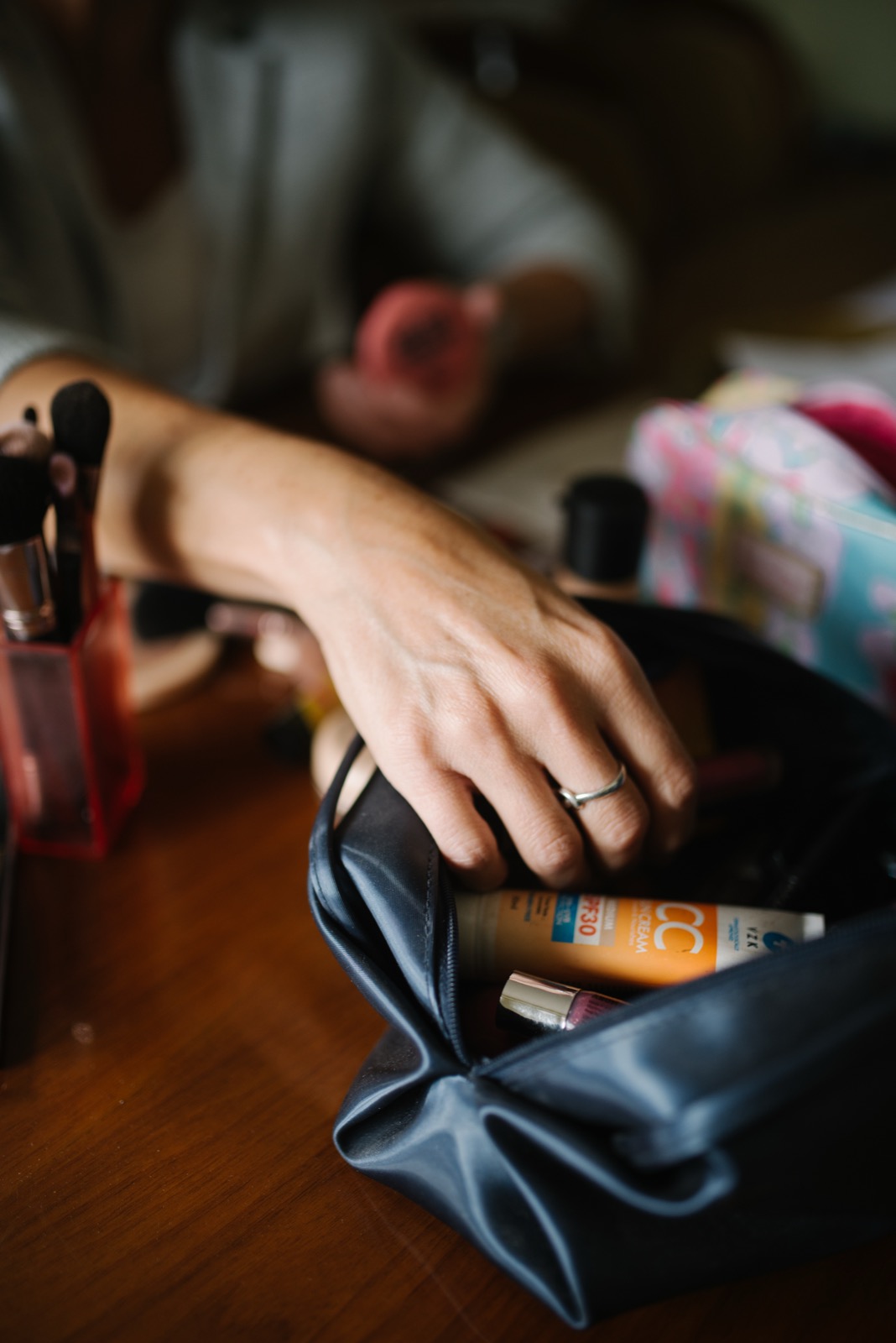 ON THE GO
 THE TOOL EDIT
