Choosing the right magnifying tool helps growers and hobbyists observe trichomes—tiny crystals signaling bud maturity and potency. Pocket digital microscopes, jeweler’s loupes, and LED magnifiers vary in magnification, lighting, and image sharing. This guide highlights five practical options for examining trichomes up close in a grow room, garden, or classroom. The selections prioritize clear optics, reliable lighting, and portability, with magnifications from about 30x to 500x and different viewing methods. See the quick table below for core specs to aid quick comparisons.
The following quick table focuses on five well-suited choices. It emphasizes practical magnification, portability, and useful features for trichome observation, without getting lost in overly technical specs. Use this as a starting point to pick a tool that matches your typical growing or study environment.
Summary of chosen products:
| Product | Brand | Magnification | Notable Feature |
|---|---|---|---|
| TOMLOV P10 | TOMLOV | 100x | 2-inch LCD live view |
| MAXLAPTER Pocket Digital Microscope | MAXLAPTER | 100x | 2-inch screen, built-in memory |
| T TAKMLY 500x USB Microscope | T TAKMLY | 500x | 2-inch screen, PC connection |
| Leffis 40X Jewelers Loupe | Leffis | 40x | LED & UV, foldable |
| AC Infinity Jewelers Loupe | AC Infinity | 30x / 60x | Dual lenses, LED |
TOMLOV P10 100x Pocket Microscope

The TOMLOV P10 handheld miniscope provides fixed 100x magnification and a bright 2-inch LCD screen for live viewing. Its share-friendly design makes it easy to capture and distribute detailed views of trichomes, plant surfaces, and small specimens. Weighing about 3.9 ounces, the device is portable enough for field checks or in-garden inspections. Operation is straightforward: power on, position the lens about 0.3 inches from the target, and observe a crisp 100x image on the built-in screen. This combination suits hobbyists, students, and professionals seeking a compact, reliable tool for up-close botanical study.
For trichome work, the 100x view reveals resin heads and glandular structures that are often missed by lower-magnification tools. The fixed magnification keeps the focus consistent, while the LCD screen simplifies alignment and sharing with peers. The integrated illumination helps reveal surface details on leaves or buds under varying lighting conditions. While it doesn’t offer adjustable focus, its straightforward design supports quick checks across multiple samples, making it a practical starter option for trichome observation and education.
MAXLAPTER 100x Pocket Digital Microscope
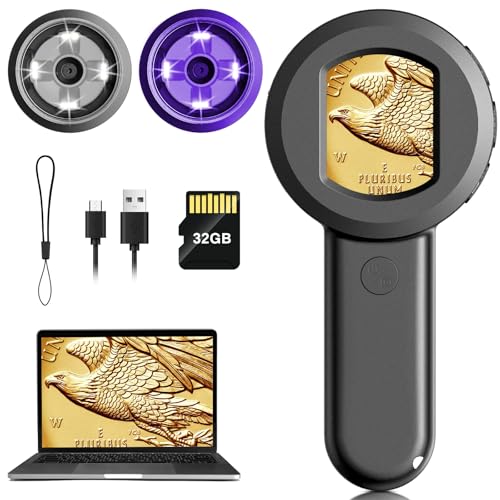
The MAXLAPTER handheld digital microscope delivers 100x magnification on a 2-inch IPS screen with LED illumination for bright, detailed images. Its portable design is well-suited for inspecting trichomes, coins, jewelry, and other tiny subjects. A notable feature is built-in memory capable of storing up to 300 photos, enabling kids and adults to document findings without external memory cards. This makes it an accessible option for classrooms, grow spaces, and hobby kits where quick capture and easy sharing matter.
Ease of use is a strong point: the device can function as a standalone viewer, and photos can be transferred to a computer for further analysis. The 3.9-ounce form factor supports on-the-go demonstrations or garden-side checks. For trichome work, the 100x view provides a practical balance between field visibility and detail, while the internal storage supports a growing library of resin structures, leaf textures, and micro-features for comparison and learning.
T TAKMLY 500x USB Digital Microscope

The T TAKMLY magnifier uses a 2.0-inch IPS color screen with fixed ultra-macro focus and up to 500x magnification. It includes 4x zoom control and stores up to 100 photos on its internal memory; it can also connect to a computer via a USB-C cable, expanding viewing and recording options. This versatility is useful for high-detail analysis of trichomes, where you may need a larger display or to share images with others in real-time. The device is suitable for Windows and Mac systems with the built-in software driving the camera feed.
In practice, the 500x level offers substantial detail for trichome heads, trichome stalks, and resin glands, though users should note the fixed focus means you’ll want a stable, flat object and careful distance management. The option to pair standalone viewing with computer capture makes this model attractive for learners who want both hands-on exploration and digital records for study or presentation purposes. It’s not intended for moving subjects or rapid action, and it’s best used on still surfaces like leaves laid flat or pressed samples.
Leffis 40X Jewelers Loupe

The Leffis 40X jewelers loupe combines durable metal construction with a foldable design for pocket portability. It includes LED illumination and a UV light for additional inspection tasks, with a 40x magnification powered by an authentic diopter glass lens. Weighing about 3.1 ounces, this loupe offers a compact option for quick trichome checks on-the-go or in the field. The fold-out design protects the lens when not in use and makes it easy to pull out for immediate observation, making it a reliable accessory for fast, macro checks on leaves, petals, and small plant features.
While not a full microscope, the 40x lens provides enough detail to spot trichome heads and resin outlines, particularly in well-lit conditions. The combination of LED and UV helps with clarity and additional inspection angles. It’s best suited for quick scans, labeling samples, or classroom demonstrations where a lightweight, durable loupe is preferred over a larger instrument. Its pocket-ready form factor supports routine, rapid field checks without sacrificing build quality.
AC Infinity 30x/60x Jewelers Loupe

The AC Infinity jewelers loupe combines a primary 30x lens with a supplementary 60x lens for dual-level magnification and LED lighting. This design provides flexibility for fast field checks at lower magnification and more detailed observations at higher magnification when needed. The two-lens system helps manage depth of field and depth perception, which is useful for studying trichome patterns, leaf textures, and tiny structures on buds. The pocket-friendly case and a lightweight build make it a practical choice for growers who travel between rooms or gardens with a single tool.
Ease of use is a key advantage here: you can switch between 30x and 60x quickly, and the integrated lighting improves contrast in varying lighting conditions. This model is well-suited for growers seeking a quick, reliable way to verify trichome development and texture without carrying a larger microscope. It’s a solid balance of portability, versatility, and ease of use for routine inspection tasks.
Buying Guide for Magnifying Tools Used on Trichomes
When selecting a magnifying tool for trichomes, consider how you’ll use it most often. A mix of magnification, lighting, and display options can impact your ability to spot trichome maturity, color, and structure. The following considerations help compare models and choose one that fits your workflow.
- Magnification Range: For trichome work, 30x to 100x covers most stages of development, while 200x–500x offers more detail on gland heads but requires steadier hands and stronger lighting. Choose a device that aligns with your typical inspection needs.
- Display and Image Capture: Models with built-in screens are convenient for on-site viewing, while those that save photos to internal memory or a PC simplify documentation and comparisons. Verify whether you need standalone viewing or computer connectivity.
- Lighting: LED is standard and essential for clear views. Some devices include UV lighting for additional inspection tasks. Look for adjustable brightness and multiple modes to reduce eye strain.
- Portability and Build: Pocket-sized tools are ideal for fieldwork, but durability matters in outdoor environments. Consider weight, folding lenses, and protective housings if you travel with the device.
- Focus and Optics: Fixed-focus devices are simple and quick, while adjustable-focus models offer more flexibility but can be trickier to use. For delicate trichome observations, stable mounting or a support surface helps maintain sharp focus.
- Connectivity and Data: USB or USB-C connections enable easy transfer to a computer, while internal memory (for photos) removes the need for immediate external storage. Evaluate how you plan to review and share images.
- Purpose and Use Case: Field checks benefit from rugged construction and bright lighting; bench work may prioritize higher magnification and image quality for documentation and study.