Trichomes are tiny, resin-coated glands that reveal key details about plants, cannabis, and other specimens when viewed up close. The right magnifier combines magnification, illumination, and portability to help you distinguish colors, textures, and micro-features with confidence. This guide spotlights five accessible magnifiers that perform well for observing trichomes—ranging from pocket loupes to handheld digital microscopes. Each option is evaluated on magnification range, lighting, image clarity, and ease of use to help you choose a tool that fits your needs and workflow.
| Product | Brand | Magnification Options | Key Benefit |
|---|---|---|---|
| TOMLOV P10 Microscope For Adults Kids | TOMLOV | Fixed 100X | Live viewing on a 2″ screen for easy sharing and trichome color checks |
| TOMLOV P10 Evo Trichome Magnifier | TOMLOV | Up to 20X digital | Compact digital magnifier with a bright IPS screen and easy capture |
| MAXLAPTER Pocket Digital Microscope | MAXLAPTER | 100X fixed; 2″ display | Versatile for trichomes, coins, and jewelry with onboard lighting |
| JBMBHC Dermatoscope Skin Analyzer | JBMBHC | 10X magnifier; 500X macro via digital microscope | Two-in-one viewing with a high-resolution screen and adjustable LEDs |
| ADE Triplet Loupes For Trichomes | Ade Advanced Optics | 10X optical magnification | Triplet optics with distortion-free close-ups and a protective leather case |
Introduction to selection considerations: when evaluating magnifiers for trichomes, prioritize a balance of magnification range, lighting, and display type. Digital options with a screen simplify viewing and sharing, while optical loupes excel in field durability and real-time depth perception. UV lighting can help identify certain features, and the presence of a protective case or portable design enhances field use. The five products below represent a mix of digital and optical solutions, each with strengths for close-up plant and trichome observation.
TomLov P10 Microscope For Trichomes

The TOMLOV P10 is a handheld, illuminated mini microscope that presents a live view on a built-in 2-inch LCD screen. It offers fixed 100X magnification, making it suitable for studying trichomes, resin glands, and micro textures on plant surfaces. Weighing about 3.9 ounces, it emphasizes portability and user-friendly operation, ideal for beginners and seasoned observers alike. To obtain a crisp view, position the lens approximately 0.3 inches from the object, as advised in its setup. The quick-share capability helps capture and disseminate observations of trichomes across plants and garden specimens.
Observing trichomes with the P10 involves straightforward steps: power on, align the lens with your target, and adjust the distance for a sharp image. The integrated illumination provides consistent lighting from the right angle, aiding the perception of color and texture. Its compact form supports on-the-go field work, classroom use, or hobbyist exploration. While it emphasizes convenience and sharing, users should note that fixed 100X magnification limits the field of view and may require careful handling to maintain focus on tiny features. Overall, it serves as a capable introductory tool for trichome observation with a screen-based workflow.
TomLov P10 Evo Trichome Magnifier

The TOMLOV P10 Evo is a handheld digital microscope designed for close-up work with a 2-inch IPS screen for live viewing. It offers up to 20X digital magnification, which is useful for inspecting trichomes, mint marks on coins, and other fine features. The device supports easy photo and video capture, enabling quick sharing or archiving of observations, and is compatible with Windows and macOS systems for broader analysis. Its compact, lightweight build makes it convenient for field notes or classroom demonstrations, where capturing trichome details in a shareable format is valuable.
In practice, the P10 Evo excels when you need a portable, screen-based viewing experience with simple recording capabilities. The 20X magnification provides a practical balance between breadth and detail for trichome assessment, while the brighter display reduces eye strain during longer sessions. The device’s digital nature means you can store and compare images side-by-side on a computer, which is beneficial for documenting plant samples or educational projects. For users prioritizing digital capture and easy sharing, the P10 Evo offers a compelling combination of portability and performance.
MAXLAPTER Pocket Digital Microscope
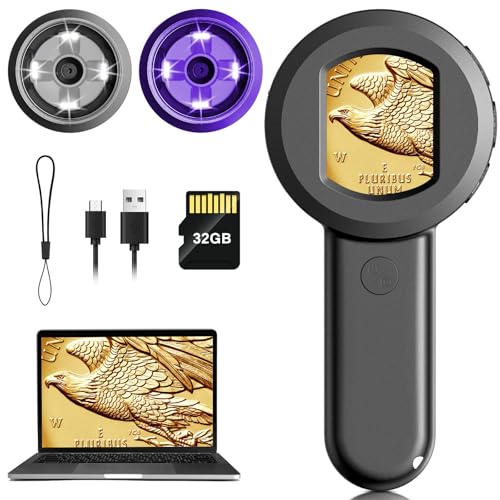
The MAXLAPTER Pocket Digital Microscope is a compact 100X handheld device with a 2-inch IPS screen. It features LED lighting to illuminate tiny details, making it suitable for examining trichomes, coins, and jewelry in bright, high-contrast images. At about 3.9 ounces, this mini scope is designed for portability and classroom or field use. The fixed 100X magnification provides crisp details on microscopic textures, and the built-in display supports quick observation without requiring external displays or devices, which makes it a convenient option for those who value immediacy and ease of sharing in your trichome observations.
Practical use highlights include: a lightweight frame that fits in a pocket or small bag, simple operation suitable for both kids and adults, and an integrated LED system that enhances visibility in varied lighting conditions. The MAXLAPTER model is especially helpful when you want a straightforward, all-in-one device for on-site inspection of plant surfaces and tiny details that matter for trichomes, as well as for hobbyists studying mineral surfaces or small hardware components. Its biggest strength is the balance between portability and a clear, digital view of details.
JBMBHC Dermatoscope Skin Analyzer

The JBMBHC Dermatoscope combines a 2-in-1 design that includes a 10X magnifier and a 500X wireless digital microscope, powered by a 1080P IPS screen and eight adjustable LEDs. This setup supports detailed skin analysis, scalp and trichome inspection, and other fine features with high clarity. The dual-lens system enables both quick, lens-based observations and detailed macro imaging, providing flexibility for researchers, students, or hobbyists who need to switch between macro and surface-level views. The adjustable lighting improves visibility of pigmentation and texture, even in dim environments, making it a robust option for comprehensive close-ups of tiny details like trichomes on skin or plant surfaces.
Users should consider the dermatoscope’s digital capability for capturing images and videos to document observations. While the device excels in close-up view and detail, its broader use may require charging or battery management for extended sessions. The combination of a handheld magnifier and digital macro microscope makes JBMBHC a versatile tool for those who want both quick observations and high-magnification captures in one device, particularly for trichome-focused studies on plant matter or scalp analysis where tiny features are critical.
ADE Triplet Loupes For Trichomes

ADE Advanced Optics presents a 10x triplet jeweler’s loupe designed for high clarity and minimal distortion. The triplet glass lens delivers edge-to-edge focus with crisp color accuracy, ideal for jewelry, coins, gemstones, and, notably, trichomes. The package includes a secure leather storage case, protecting the lens from scratches and dust during pocket storage, travel, or field use by jewelers and collectors. The bonded triplet design provides reliable, distortion-free close-ups of fine details, making this option well-suited for observers who prioritize optical quality over digital features. The lack of a screen means it relies on direct eye-view, which some observers prefer for accurate depth cues and rapid assessment in the field.
In practice, the ADE Triplet Loupes are best for quick, high-clarity observations when you want a simple, durable optical tool without electronics. The triplet lenses deliver sharp, true-to-life images of trichomes and micro-features on plants, gemstones, or specimens, while the included case supports convenient carry. If portable, power-free viewing with superb optical clarity is your priority, this loupe stands out as a solid, field-ready choice for trichome observation and other close-up tasks.
Buying Guide
- Magnification range: For trichomes, a mix of moderate to high magnification helps. Optical loupes (around 10x) provide depth and quick observation, while digital options from 20x to 100x allow detailed documentation. Be mindful that higher magnification often reduces the viewing field and requires steadier handling.
- Display type: Digital microscopes with built-in screens simplify viewing and sharing; optical loupes offer direct eye-view for depth perception and speed. Choose based on whether you need to record images or prefer immediate, on-face viewing.
- Illumination: LED lighting is common and versatile; UV light can help detect fluorescence or markings on certain minerals or materials. Adjustable LEDs improve visibility across different surface textures and colors found in trichomes and plant surfaces.
- Portability and build: Lightweight, compact devices excel for fieldwork or classroom use. A rugged build or protective case helps protect lenses during travel and outdoor observations.
- Image capture and connectivity: Digital magnifiers with photo/video capture and USB output enable easy archiving and comparison. If you need to save observations, ensure compatibility with your computer or device ecosystem (Windows or macOS).
- Lens quality: Triplet lenses in optical loupes yield sharp, distortion-free images with consistent color. If you rely on detailed color and texture, a high-quality optical element is beneficial.
- Use-case guidance: For beginners, a device with a stable stand or simple distance guidance helps. For field researchers, optical loupes paired with a compact case and quick illumination can be ideal. For educators or hobbyists, digital microscopes with sharing features support collaborative learning.
- Maintenance: Clean lenses carefully with a microfiber cloth. Some devices include cleaning materials; avoid solvents that could degrade coatings.
In selecting the best magnifier for trichomes, consider how you plan to use the tool: on-site field observations may favor rugged optical loupes, while classroom or lab setups may benefit from digital microscopes with a screen and capture capabilities. The five products highlighted here provide a spectrum of options, from screen-based viewing to traditional optical viewing, allowing you to tailor your choice to your preferred workflow and the level of detail you require for trichome analysis.